A breakup can be one of the most emotionally difficult experiences in life. Whether a relationship lasted a few months or several years, losing someone you loved can bring sadness, confusion, anger, loneliness, and uncertainty about the future. Even when both people agree that ending the relationship is the right decision, the emotional impact may take time to process. Understanding the stages of grief after a breakup can help you recognize your feelings and understand why healing does not always happen in a straight line.
Relationship grief is different for everyone. Some people experience intense sadness immediately, while others initially feel relief and experience emotional pain later. You may move between different feelings, revisit memories, or feel better one day and struggle again the next. These reactions do not mean you are failing to move on. They are possible parts of adjusting to a significant emotional change, and understanding them can help you take healthier steps toward recovery.
What Are the Stages of Grief After a Breakup?
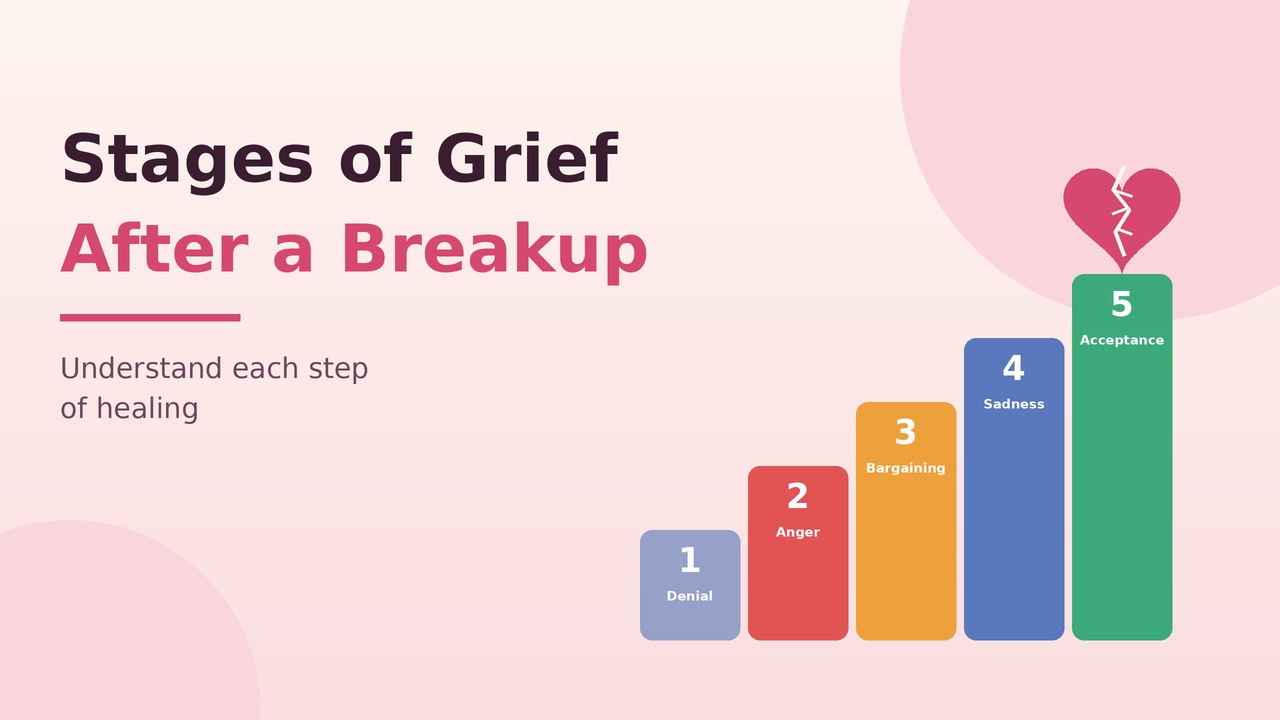
The stages of grief are commonly described through five emotional experiences: denial, anger, bargaining, depression, and acceptance. These stages are associated with the Kübler-Ross model, which was originally developed to describe responses to dying and death. People also use the model to understand other major losses, including the end of a romantic relationship.
However, the five stages are not a strict psychological checklist for every breakup. You do not have to experience all five, and they do not necessarily happen in a particular order. You might experience anger before denial, move between sadness and acceptance, or feel several emotions at the same time.
The purpose of understanding these stages is not to label every feeling. Instead, they offer a useful way to recognize common emotional reactions and understand that healing takes time.
1. Denial: Struggling to Accept the Breakup
Denial is a possible early reaction after a relationship ends. You may find it difficult to believe that the relationship is really over, especially if the breakup happened unexpectedly. Your mind may continue to expect messages, phone calls, or familiar routines from your former partner.
You might repeatedly check your phone, revisit old conversations, or imagine that the breakup is temporary. Some people convince themselves that their ex-partner will change their mind or return after a few days.
These reactions can happen because your daily life has suddenly changed. You may have built routines, plans, and expectations around another person. Accepting that those plans are no longer shared can feel overwhelming.
How to cope with denial: Give yourself time to understand what happened. Avoid making important decisions based only on the hope that your former partner will return. Talk with someone you trust, maintain your daily routine, and allow yourself to acknowledge the relationship’s ending without judging your emotions.
2. Anger: Feeling Hurt, Frustrated, or Betrayed
After the initial shock, anger may become more noticeable. You might feel angry about how the relationship ended, things your partner said, or problems that were never resolved. If you believe you were treated unfairly, frustration can become particularly strong.
Sometimes anger is directed toward your former partner. At other times, you may blame yourself, mutual friends, or even the circumstances that affected the relationship. You might repeatedly think about arguments and imagine what you should have said or done differently.
Anger can be a natural response to emotional pain, but acting on it impulsively can create additional problems. Sending aggressive messages, posting private details online, or trying to hurt your ex-partner may make the situation more stressful.
How to cope with anger: Give yourself space before responding to emotional triggers. Write down your feelings privately, take a walk, exercise, or speak with a supportive person. If you need to communicate with your former partner about practical matters, keep the conversation respectful and focused.
3. Bargaining: Hoping You Can Change the Outcome
Bargaining often involves imagining ways the breakup could have been prevented. You may think about promises you could make, habits you could change, or conversations that might convince your former partner to reconsider.
Common thoughts include wondering whether the relationship would have survived if you had spent more time together or handled disagreements differently. You might also replay memories and focus on the good moments while overlooking the problems that existed.
This stage can create a strong desire to contact your ex repeatedly. You may promise to change everything because the possibility of losing the relationship feels more painful than facing its difficulties.
How to cope with bargaining: Reflect honestly on the relationship without taking responsibility for everything that went wrong. A healthy relationship requires effort from both people. If reconciliation is not mutually desired, repeated attempts to change someone’s decision may prevent you from adjusting to the breakup.
It can help to write down what you learned from the relationship, what you would do differently in the future, and which personal boundaries you want to maintain.
4. Depression: Experiencing Sadness and Loneliness
The sadness associated with a breakup can become particularly difficult when the reality of the separation begins to feel permanent. You may miss your former partner, feel lonely during familiar activities, or struggle with routines that once included both of you.
Some people experience changes in sleep, appetite, concentration, or motivation. You might lose interest in hobbies or find it difficult to imagine starting another relationship. Special dates, favorite places, photographs, and shared memories can bring back painful emotions.
It is important to understand that ordinary breakup sadness is not automatically the same as clinical depression. However, persistent or severe symptoms deserve attention, particularly when they interfere with everyday functioning.
How to cope with breakup sadness: Maintain regular meals, get enough sleep, spend time outdoors, and stay connected with supportive friends or family members. Set small daily goals instead of expecting yourself to feel normal immediately. If sadness becomes overwhelming, lasts for a prolonged period, or affects your ability to function, consider speaking with a qualified mental health professional.
5. Acceptance: Learning to Move Forward
Acceptance does not mean that you have forgotten your former partner or that the relationship never mattered. It means you are gradually recognizing that the relationship has ended and beginning to build a life that does not depend on getting back together.
You may still remember meaningful moments, but those memories become less disruptive. You start focusing more on your personal goals, friendships, work, and interests. Thinking about the future may also become easier.
Acceptance does not require you to feel happy about the breakup. You can acknowledge that the experience was painful while understanding that your life can continue in a meaningful way.
How to move forward: Reconnect with activities you enjoy, establish new routines, strengthen friendships, and set realistic personal goals. Avoid comparing your healing process with someone else’s. Your progress should be measured by your own emotional well-being, not by how quickly you start dating again.
How Long Do the Stages of Grief After a Breakup Last?
There is no fixed timeline for recovering from a breakup. Some people begin feeling better within a few weeks, while others need several months or longer to adjust. The length of a relationship is only one factor. Emotional attachment, living arrangements, shared responsibilities, the reason for the separation, and available social support can all influence the healing process.
A sudden breakup may feel especially difficult because you had little time to prepare emotionally. Ending a long-term relationship may also involve losing shared routines, friendships, future plans, or a sense of identity.
Instead of asking how many days it should take to move on, pay attention to gradual changes. You may notice that you think about the relationship less frequently, sleep better, regain interest in activities, or feel more comfortable spending time alone.
Remember that emotional recovery is rarely perfectly consistent. Feeling sad again after several good days does not erase the progress you have made.
Why Does a Breakup Feel Like Losing Someone?
A romantic relationship can become part of your everyday emotional life. You may share personal experiences, discuss future plans, communicate throughout the day, and depend on your partner for companionship. When the relationship ends, you lose more than a romantic connection. You may also lose familiar routines, emotional support, and expectations about the future.
This can explain why ordinary activities suddenly feel different. Eating at a familiar restaurant, hearing a particular song, or visiting a shared place may remind you of your former partner.
You may also experience uncertainty about your identity, especially if your social life and personal plans were closely connected to the relationship.
Recognizing these losses can help you understand why the breakup feels so significant. Give yourself permission to grieve the relationship while gradually creating new experiences and routines.
How to Heal After a Breakup and Move On
Healing after a breakup requires patience and practical steps. Start by accepting your emotions instead of pretending that everything is fine. Talking to a trusted friend, writing in a journal, or seeking professional support can help you process difficult feelings.
Creating some distance from your former partner may also be useful. Constantly checking their social media, reading old messages, or asking mutual friends for updates can make emotional adjustment more difficult. If you do not share responsibilities that require regular contact, consider taking a temporary break from unnecessary communication.
You should also focus on your physical well-being. Regular exercise, balanced meals, adequate sleep, and a consistent daily routine can support your overall emotional health. These activities will not instantly remove heartbreak, but they can help you feel more stable.
If you are unsure how to approach the end of a relationship or communicate difficult feelings, learning about ending a relationship can provide additional perspective on handling separation respectfully.
Should You Stay Friends With Your Ex After a Breakup?
Remaining friends with an ex-partner is not automatically wrong, but it may not be suitable immediately after a breakup. If one person still hopes to restart the relationship, friendship can create confusion and make emotional recovery more complicated.
Before agreeing to remain friends, consider whether both people genuinely accept the separation. Ask yourself whether regular communication would help you feel comfortable or keep you emotionally attached.
Taking time apart can create space to understand your feelings and establish new boundaries. If you share children, property, work responsibilities, or other important commitments, communication may still be necessary. In those situations, keeping conversations respectful and focused on practical matters can help reduce conflict.
There is no requirement to remain friends after a relationship ends. Choosing distance can be a healthy decision when it protects your emotional well-being.
When Should You Seek Professional Help After a Breakup?
Most people experience emotional pain after a breakup, and support from friends and family can make the adjustment easier. However, professional help may be important if your distress becomes severe or continues to interfere with everyday life.
Consider speaking with a mental health professional if you experience persistent hopelessness, significant changes in sleep or appetite, difficulty concentrating, withdrawal from daily activities, or an inability to manage normal responsibilities. A therapist can help you understand your emotional reactions and develop healthier coping strategies.
If you experience thoughts of harming yourself or feel unable to stay safe, seek immediate help from local emergency services or a trusted person who can support you in getting urgent care.
Asking for help does not mean you are weak. It is a responsible step toward protecting your well-being.
Frequently Asked Questions About Breakup Grief
What Is the Hardest Stage of a Breakup?
The hardest stage varies from person to person. Some people struggle most with the initial shock and denial, while others find loneliness and sadness more difficult. The intensity can also change depending on the circumstances of the breakup and the level of emotional attachment.
Do the Five Stages of Grief Always Happen After a Breakup?
No. The five stages are a general framework, not a universal process. You may experience only some of the emotions, move between them, or experience them in a different order. There is no single correct way to respond to a relationship ending.
Why Do I Still Miss My Ex After Accepting the Breakup?
Missing someone does not necessarily mean you want the relationship back. You may miss their companionship, familiar routines, or positive memories. Acceptance and emotional attachment can exist at the same time, and those feelings may gradually become less intense.
Is It Normal to Feel Better and Then Sad Again?
Yes. Emotional recovery can include good days and difficult days. A memory, anniversary, or unexpected reminder may temporarily bring back sadness. This does not mean you have returned to the beginning of the healing process.
How Can I Stop Thinking About My Ex?
You cannot always control which thoughts appear, but you can change how you respond to them. Reduce unnecessary reminders, avoid repeatedly checking social media, maintain a daily routine, and spend time on activities that support your well-being. With time, the thoughts may become less frequent and easier to manage.
Final Thoughts
The stages of grief after a breakup can help explain the different emotions people may experience when a romantic relationship ends. Denial, anger, bargaining, sadness, and acceptance are common descriptions of grief, but they do not follow a fixed order or timeline. Every person’s experience is different.
Give yourself time, maintain healthy routines, establish boundaries with your former partner, and seek support when you need it. You do not have to forget someone or rush into another relationship to prove that you have moved on. Healing means gradually accepting the change, learning from the experience, and creating a healthier future for yourself.
2 thoughts on “Stages of Grief After a Breakup: Understanding the Emotional Healing Process”